Black Flag Resynced Ultimate Plans and Jackdaw Upgrades
A practical Jackdaw upgrade order, resource budget, Ultimate Plan workflow, and readiness test for difficult naval encounters.
The Jackdaw upgrade screen can tempt players into buying whatever is newly affordable. That creates a ship with several partial systems but no clear combat strength. A better build follows failure modes. If ordinary volleys remove too much health, buy survivability. If battles last so long that incoming damage accumulates, improve reliable damage. If targets escape your firing arc, work on handling and range. Specialized weapons come after the ship can consistently survive and finish common encounters. This ordering makes every resource purchase solve a problem you have actually observed.
Ultimate Plans add a second gate: owning materials is not enough if the plan has not been found, and finding the plan is not enough if the resource bill is incomplete. Keep those states separate. Some plans are associated with treasure or exploration, so route them alongside map and regional collectible work. When the plan is acquired, inspect the exact current crafting requirement rather than trusting an old list. Resynced can adjust economy values or reward paths even when an upgrade name is familiar.
This guide does not promise a single perfect build. Naval difficulty, aiming preference, accessibility settings, and willingness to board all change the best spend. It provides a conservative readiness ladder and a testing protocol. The aim is to reach legendary encounters with a ship whose strengths you understand, not a fully upgraded menu that has never been tested under pressure.
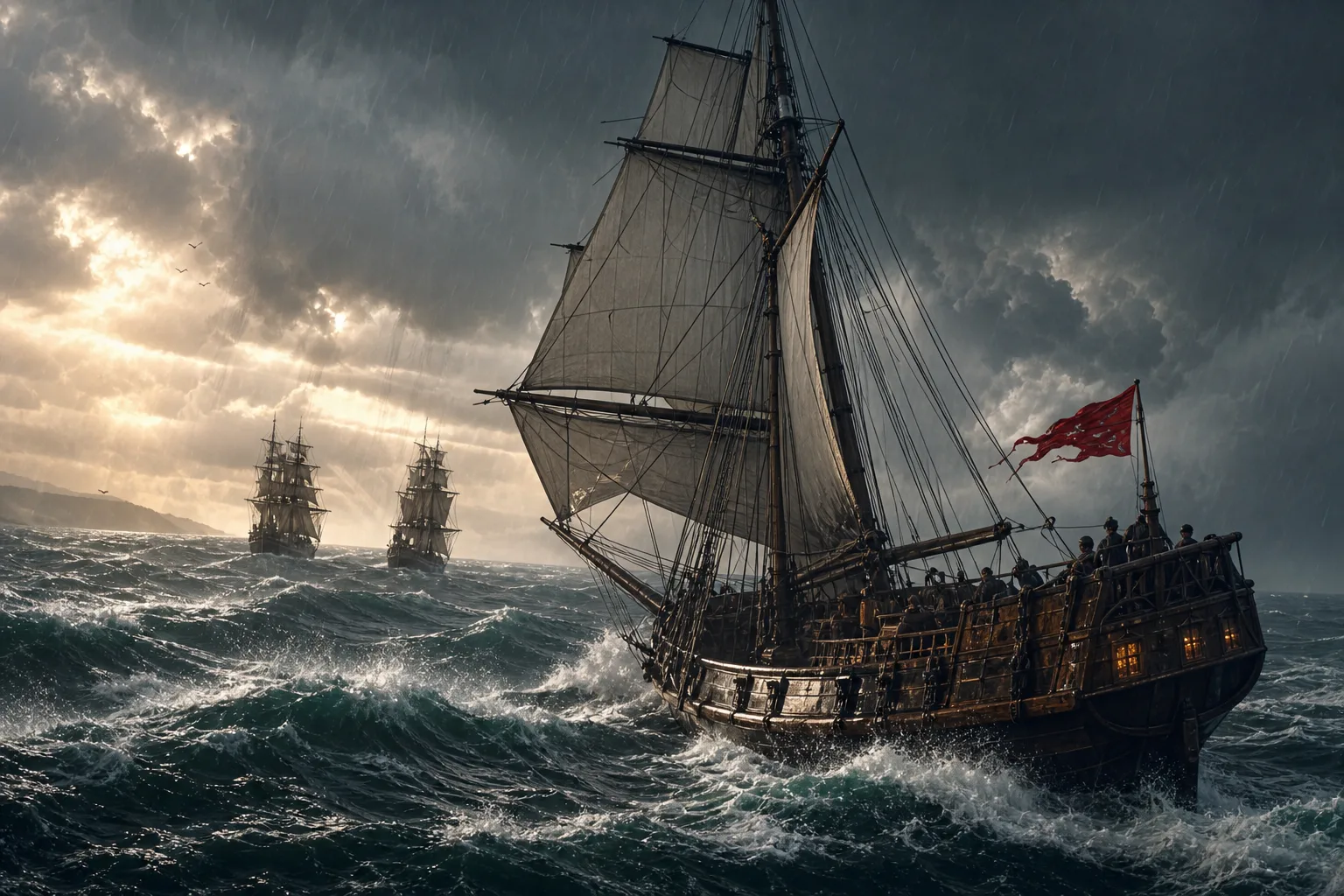
Field visual
Original route-desk artwork supports the planning task. It is not an in-game screenshot and does not claim pixel-perfect geography.
Step-by-step guide
- Measure the current bottleneck
Fight one ordinary ship near your level without spending rare resources first. Record hull lost, repairs consumed, time to disable, ammunition pressure, and which attack created most of your damage. If you lose large health chunks despite good positioning, survivability is the bottleneck. If you take many small hits because the fight lasts too long, damage is the bottleneck. If you cannot keep weapons on target, handling or range is the issue. This short test prevents cosmetic progress in the upgrade menu from replacing an actual combat solution.
- Build a survivable baseline
Prioritize hull strength or armor until one mistake does not end the encounter and ordinary victories leave enough capacity for the next fight. Increase repair or storage utility when your route repeatedly ends because supplies are full or exhausted. Survivability is not an excuse to trade broadsides carelessly; it creates time to learn enemy patterns and recover from a bad wave or collision. After each purchase, repeat the same controlled fight. Stop investing when damage taken becomes predictable and affordable, then move resources to shortening the battle.
- Improve the damage you land most reliably
Broadside or round-shot power is a strong general investment when you consistently create side-on firing windows. Mortars help when you can maintain distance and lead targets. Close-range options reward aggressive positioning but expose the hull. Choose the weapon that matches observed hits, not the highest theoretical damage. Upgrade one family enough to create a noticeable time-to-disable improvement before spreading materials across every slot. A shorter fight is also defensive value because it reduces the number of enemy volleys and environmental mistakes you must survive.
- Track Ultimate Plans as four-state projects
For each desired top-tier upgrade, record plan location known, plan acquired, materials complete, and upgrade crafted. Link treasure-map rows when the plan comes from a cache, but do not mark the ship upgrade complete when the chest opens. Return to the relevant crafting screen and verify that the plan is recognized. Write down the live resource bill, including any capacity prerequisite. If the requirement differs from a legacy guide, use the current game. This four-state record identifies exactly whether the remaining work is exploration, economy, storage, or crafting.
- Farm resources through profitable loops
Choose naval targets you can defeat cleanly, board when the repair or cargo benefit justifies the time, and combine resource runs with a destination such as a plan, treasure map, or officer step. Avoid attacking the strongest available ship solely because it carries more materials if the expected repairs erase the gain. Keep a reserve instead of spending to zero; a newly crafted weapon is not useful if the next voyage starts without ammunition or recovery capacity. Reassess the loop after each major upgrade because safer targets may change.
- Pass a readiness test before legendary ships
Use a controlled hard-but-not-legendary encounter. Enter with full supplies, keep the intended engagement range, demonstrate consistent damage with your chosen weapon family, and finish without consuming the entire repair reserve. Then repeat once after a save or travel transition to ensure the result was not luck. Readiness means you can execute a plan while preserving recovery options. It does not require every menu tile to be maxed. If the test fails, identify one bottleneck and upgrade it; do not farm blindly for the whole tree.
Quick reference
Jackdaw investment ladder
| Priority | Buy when | Proof it worked |
|---|---|---|
| Hull / armor | One mistake removes an unsafe amount of health | Ordinary fights leave a predictable reserve |
| Reliable broadside damage | You create side-on windows but fights drag | Time to disable falls noticeably |
| Mortar / range | You control distance and lead targets well | Damage begins before enemy pressure peaks |
| Close-range tools | You can approach without uncontrolled trades | Burst damage exceeds added hull cost |
| Capacity / utility | Storage or supply limits break profitable routes | Longer loops remain sustainable |
Video evidence
These exact embeds were checked on 2026-07-13. They are reference evidence, not substitutes for the current in-game UI or patch state.
Black Flag Resynced legendary-ship combat reference
Concrete gameplay evidence paired with PC Gamer's legendary-ships coverage. Treat tactics as a visual reference and recheck after balance patches.
Assassin's Creed Black Flag Resynced — Official Game Overview Trailer
A concrete official video reference for the remake's presentation and feature overview. The embed is used as reference evidence; its thumbnail is not copied into site assets.
FAQ
What should I upgrade first on the Jackdaw?
Start with enough hull or armor to survive mistakes, then improve the damage source you land consistently. Add specialized weapons and utility when a measured bottleneck justifies them.
Does finding an Ultimate Plan automatically install the upgrade?
No. Verify plan recognition, current materials, prerequisites, and the crafted upgrade as separate states.
Do I need every upgrade before legendary ships?
Not necessarily. You need a coherent build that passes a controlled readiness test and preserves repairs under sustained pressure.
Can I use 2013 resource costs?
Do not rely on them. Read the current Resynced crafting screen because economy and requirements can differ.
Sources
- Ubisoft News — Everything You Need to Know for Launch Primary source for new story content, officers, Animus Rifts, combat, stealth, naval changes, and difficulty options. Checked 2026-07-13.
- Ubisoft News — naval gameplay deep dive Primary source for Resynced naval design changes. Checked 2026-07-13.
- PC Gamer — Black Flag Resynced guide hub Secondary guide hub used to cross-check topic coverage and current terminology. Checked 2026-07-13.
- GamesRadar — Black Flag Resynced guide Secondary guide index used for cross-checking player tasks. Checked 2026-07-13.